Concrete Revetment Mattress

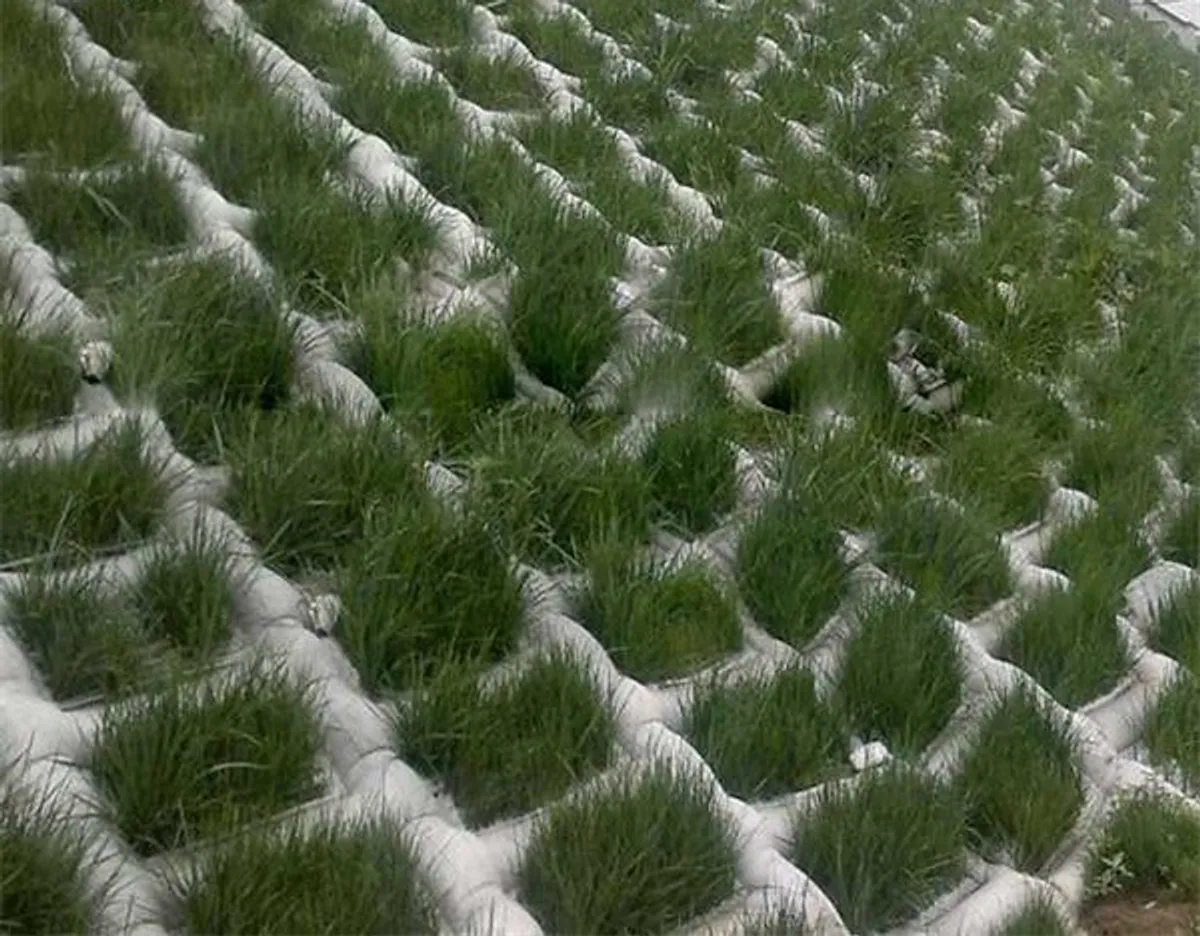
SIGMA concrete revetment mattress is a fabric-formed (Geofabriform) concrete lining: a large, continuous bag-like form made of two layers of woven geotextile, joined by nylon spacer cords that control the fill thickness, that is pumped full of high-strength flowable concrete grout and sets into a uniformly patterned concrete liner system. Functioning like an articulated concrete mattress, it is much thinner than rock revetment, conforms to the subgrade as it fills, installs on steep slopes and complex shapes, and reduces the potential for scour on channels, river banks and shorelines.

Fabric-formed concreteArticulated concrete mattressScour-resistant slope lining
Concrete Revetment Mattress

What a concrete revetment mattress is

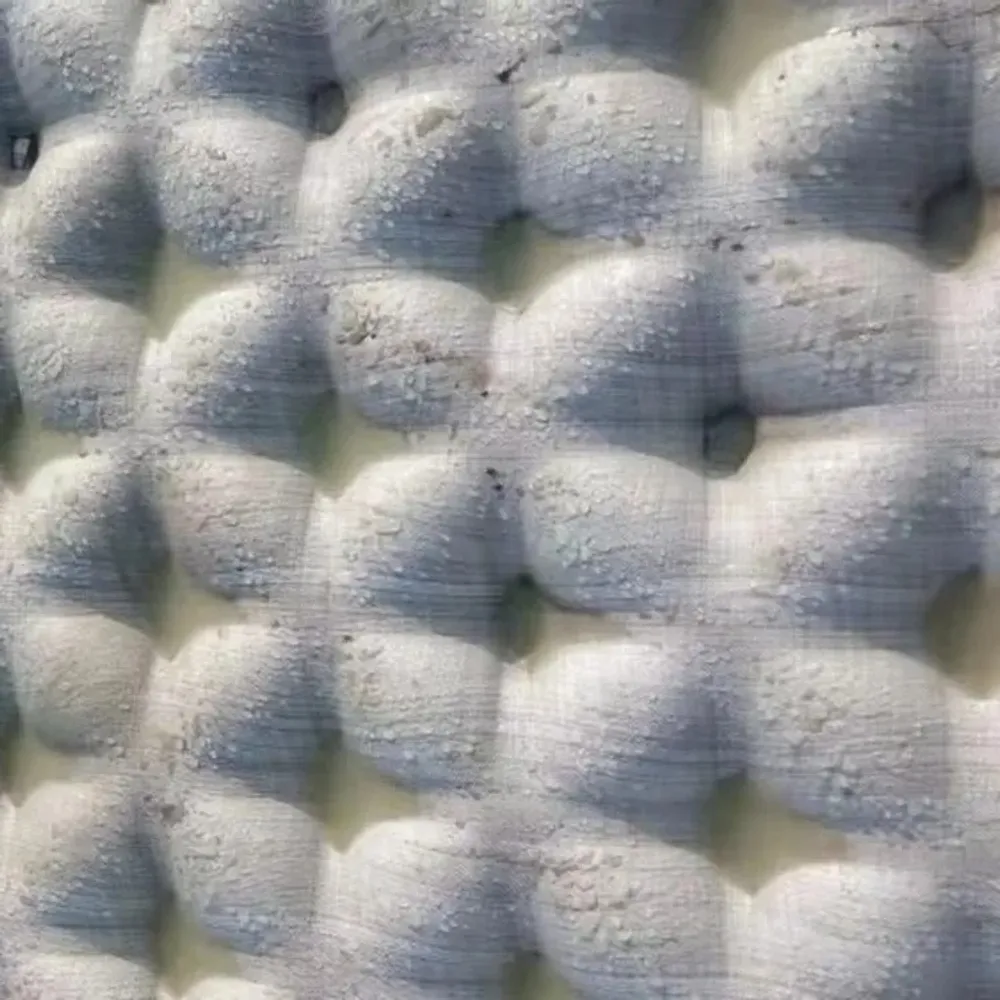
A concrete revetment mattress is a fabric-formed concrete lining (Geofabriform). The form is a large, continuous bag-like fabric made of two layers of woven geotextile, with the upper and lower layers joined by nylon spacer cords that fix the fill thickness. On site the form is pumped full of high-strength flowable concrete grout, which sets into a uniformly patterned concrete liner. Functioning like an articulated concrete mattress, the result is a thin, durable, scour-resistant revetment for channels, river banks and shorelines.

How the fabric form is made

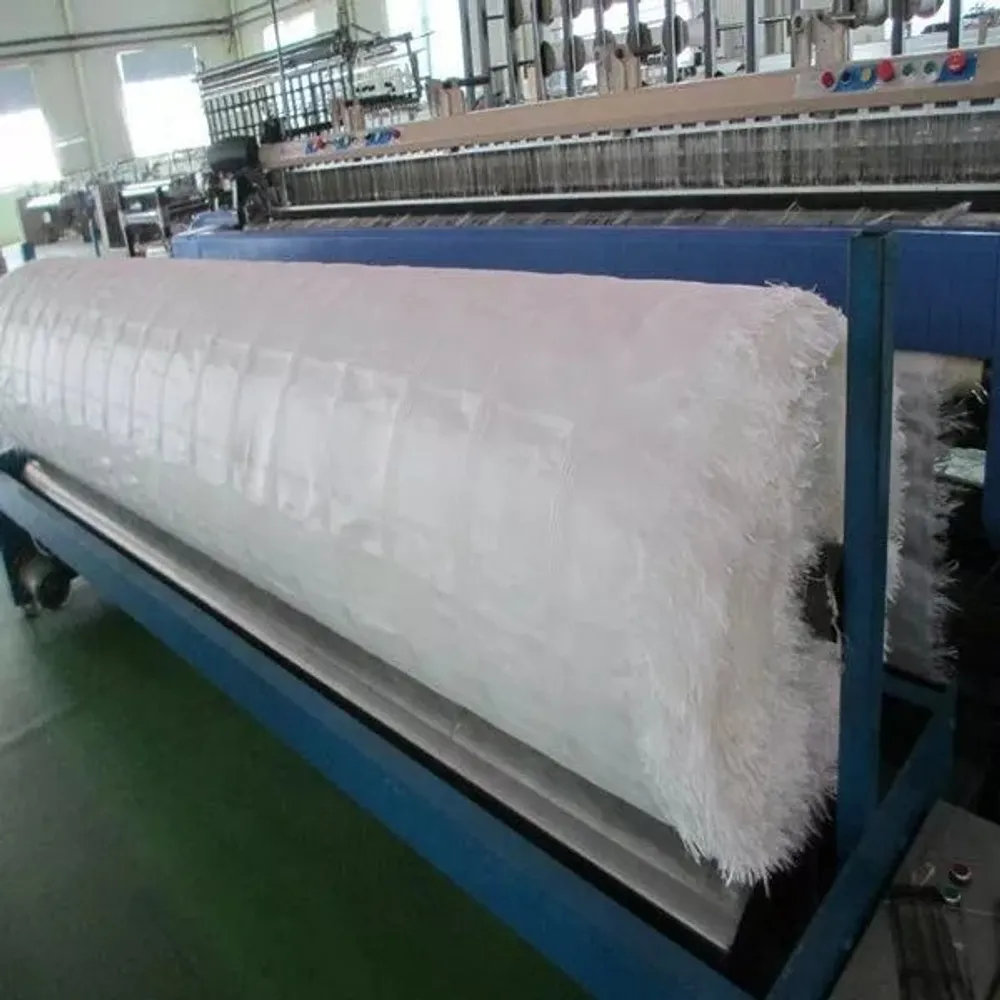
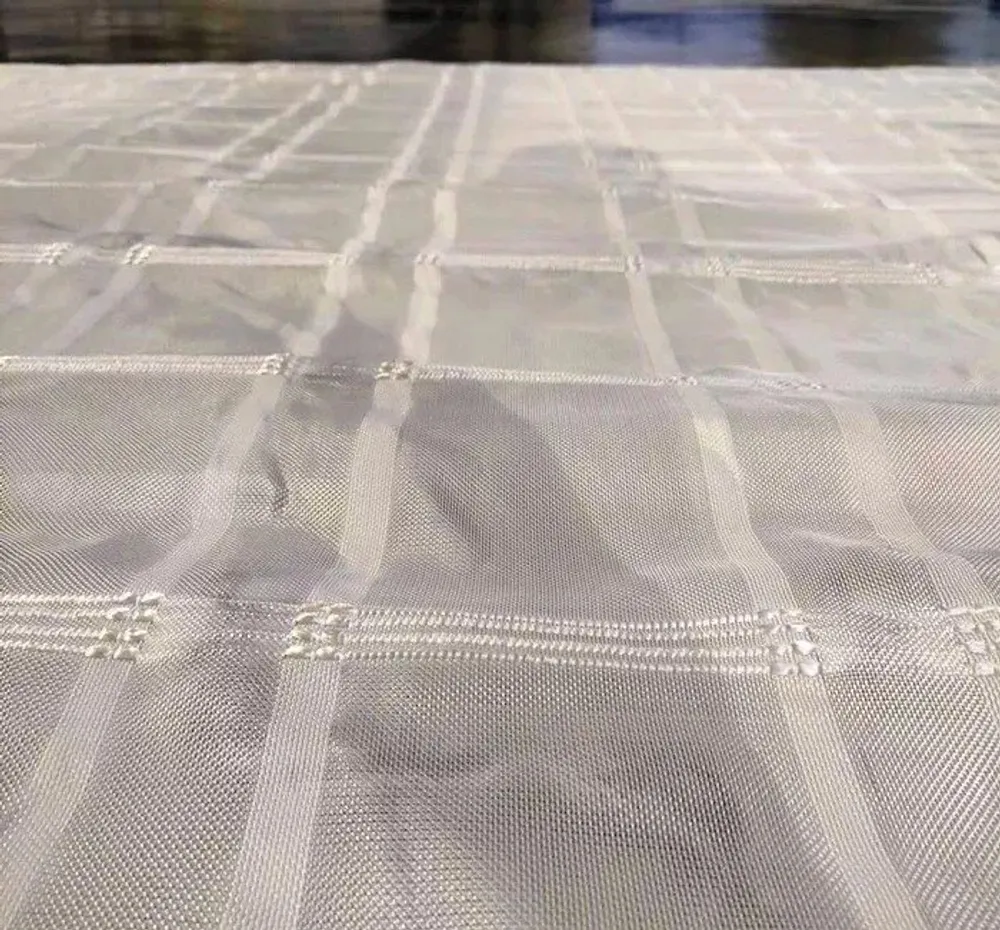
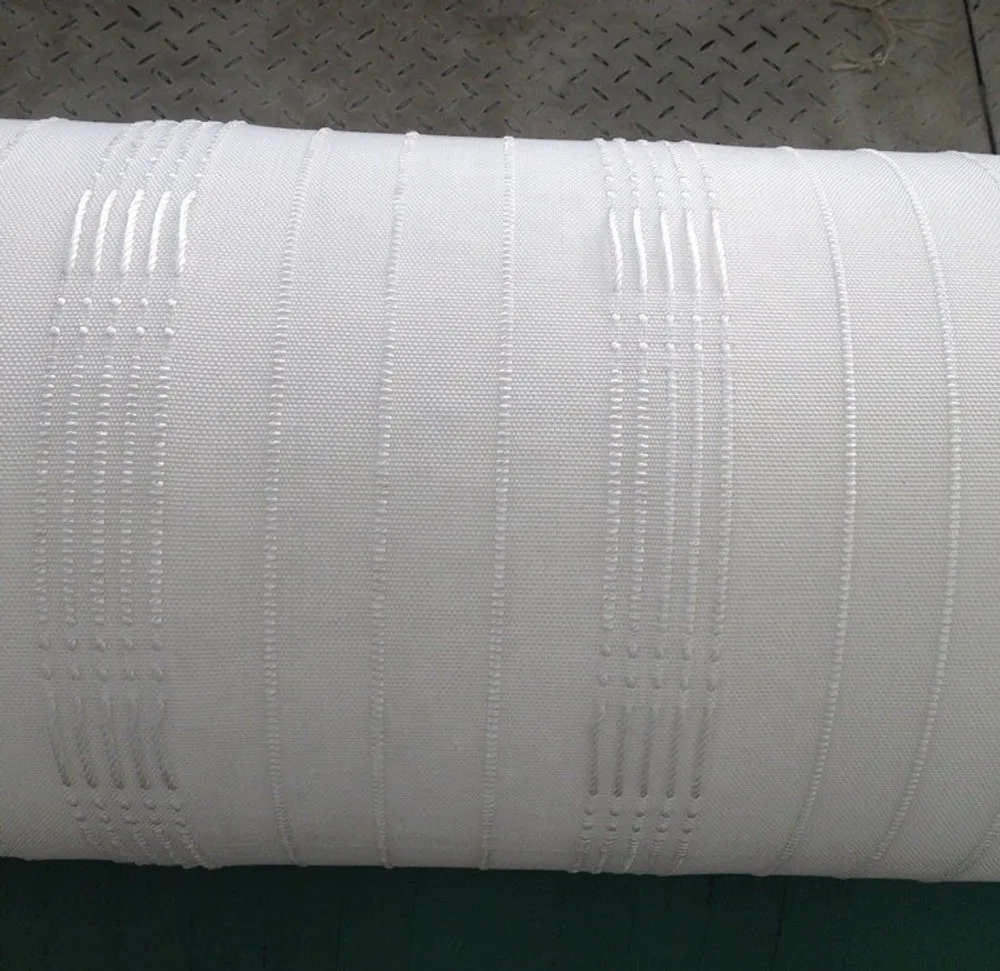
The mattress starts as a highly engineered woven geotextile, fabricated into custom panel sections and patterns for the job. Two layers of this fabric are woven so that the upper and lower sheets are tied together at intervals by nylon spacer cords of a set length, forming a continuous, large-area bag with filter points where the layers meet. The woven geotextile gives the form high tensile strength and low stretch, so it holds its shape and the controlled thickness while the grout is pumped in and sets.

Why use an articulated concrete mat for slope protection

As an articulated concrete mat, the mattress is much thinner than rock revetment yet still resists scour, which is why concrete mattress slope protection is specified on channels and banks where rip-rap is too heavy or too thick. The flexible fabric form conforms to the contours of the subgrade as it fills, installs on steep slopes without difficulty, and adapts easily to complicated shapes — and the spacer cords give a perfectly controlled thickness no matter the slope. The filter points where the two layers interweave let seepage water on the slope drain out, so the mattress does not build uplift behind it.

How it is installed

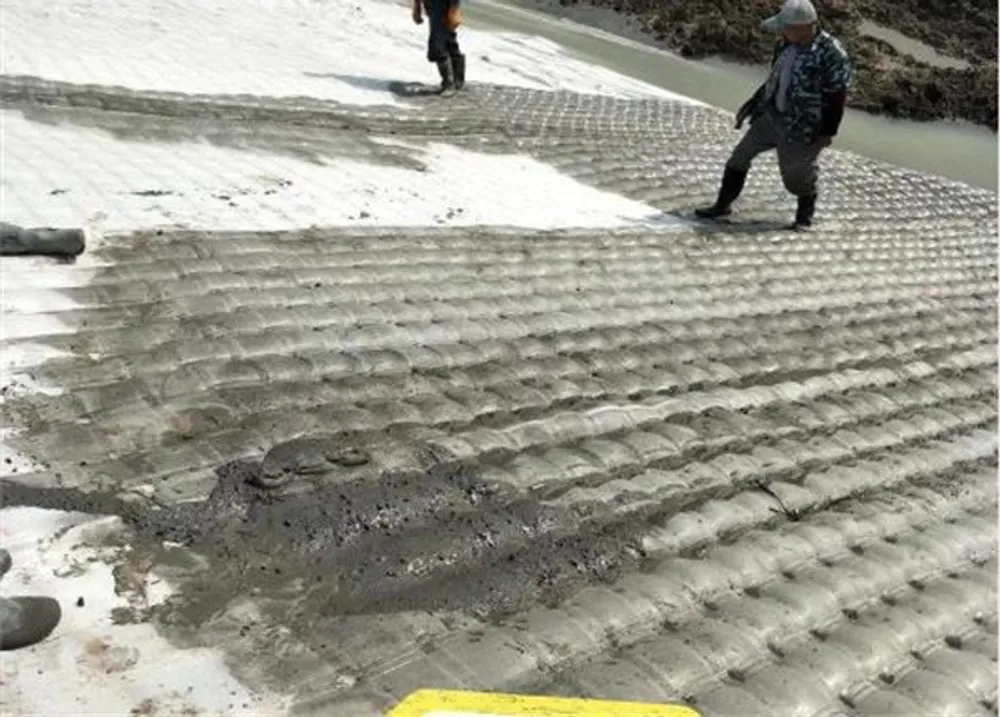
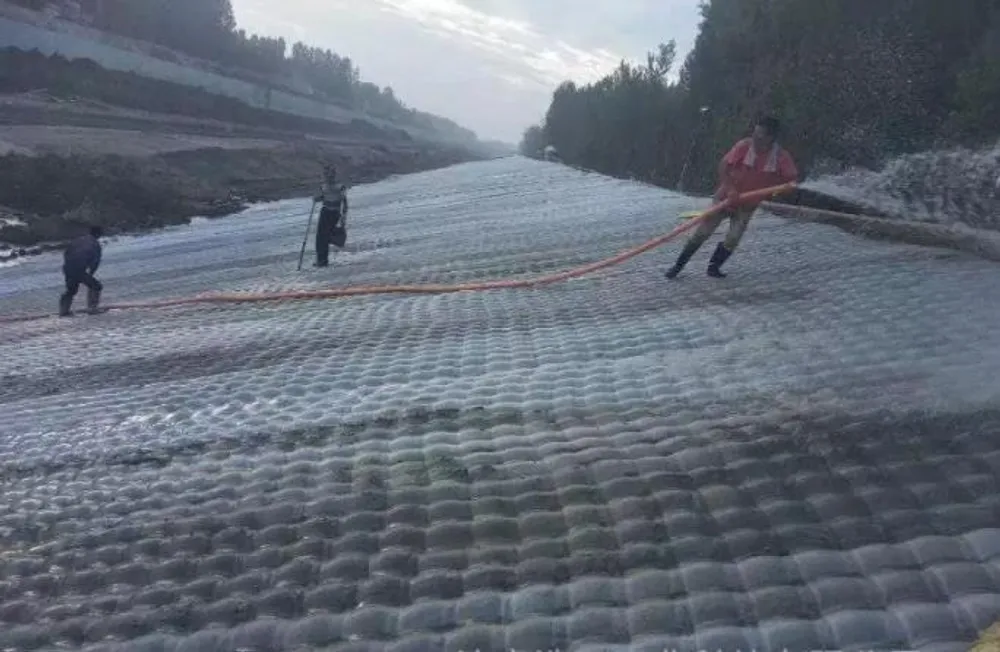
The empty fabric panels are unrolled and positioned on the prepared bank or channel, hung vertically, laid in grooves or cut to shape as the geometry requires, then pumped full of flowable concrete grout from a standard pump. The grout sets quickly into the uniformly patterned liner. Because the work is done by pumping into a fabric form, the mattress can be placed underwater without a cofferdam or interrupting the flow, needs no steel reinforcement or concrete finishing, and does not require dewatering — keeping mobilisation and transport costs low.

Where it is used

The mattress suits channel and canal slope linings, river-bank and embankment revetment, shoreline and coastal scour protection, bridge-pier and culvert-outlet scour protection, and steep-slope erosion control where rock is impractical. By slowing flow velocities and reducing wave run-up it cuts hydraulic uplift, and by conforming to the soil contours it reduces the potential for scour while resisting the stresses of high-velocity flow — all with limited environmental impact thanks to the low-alkalinity grout.

Fabric, fill and specification

The woven geotextile form and the pumped grout are specified together: fabric mass and tensile strength, panel size, fill thickness and the 28-day grout strength all depend on the hydraulic duty. Because the fabric-formed mattress is engineered per project rather than to a single public product standard, SIGMA confirms these values from production data and the project design — never guessed. For a pre-mixed cementitious mat that hydrates with water instead of pumped grout, see our concrete blanket; for a sand-filled soft-armour alternative see our geobag; and browse the full erosion control range.

More views

Concrete Revetment Mattress — More viewsConcrete Revetment Mattress — More viewsConcrete Revetment Mattress — More views

Manufacturing

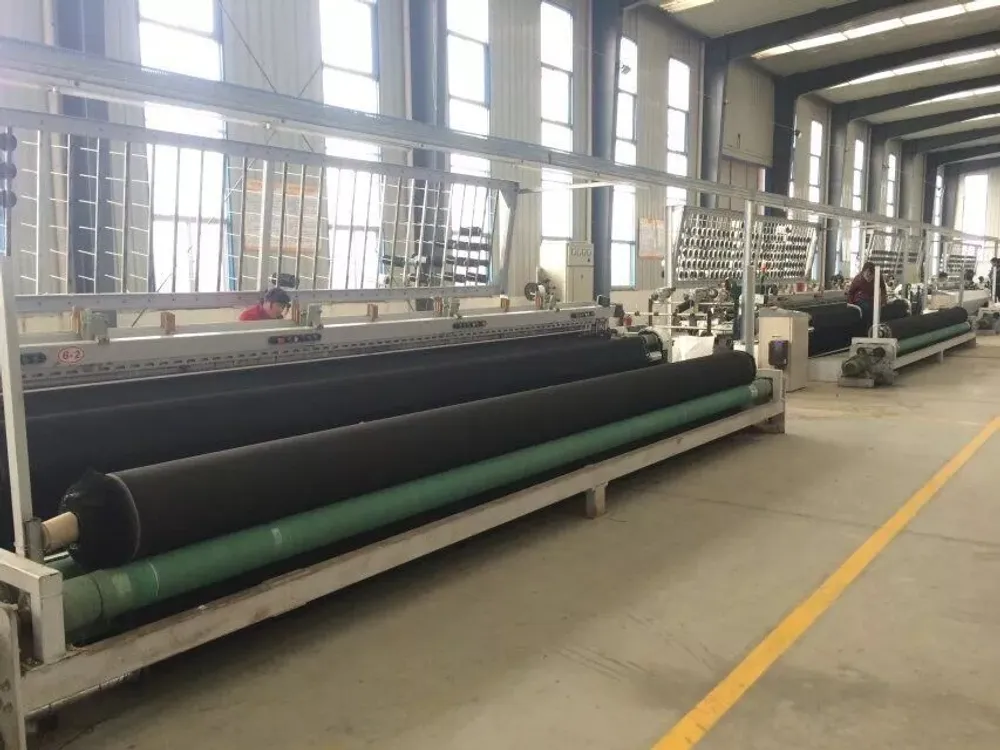
Concrete Revetment Mattress — ManufacturingConcrete Revetment Mattress — ManufacturingConcrete Revetment Mattress — ManufacturingConcrete Revetment Mattress — Manufacturing

Key features

  • Fabric-formed concrete — thinner than rock revetment
  • Installs on steep slopes without difficulty
  • Conforms to the subgrade contours as it is filled
  • Reduces the potential for scour on banks and channels
  • Adapts easily to complicated shapes
  • Controlled, uniform thickness regardless of slope
  • Filter points drain slope seepage to relieve uplift
  • Can be placed underwater with no cofferdam or flow interruption
  • No steel reinforcement, concrete finishing or dewatering needed

Ideal for

  • Channel and canal slope lining
  • River-bank and embankment revetment
  • Shoreline and coastal scour protection
  • Bridge pier and culvert outlet scour protection
  • Steep-slope erosion control where rock is impractical

Specifications

Concrete revetment mattress (fabric-formed / articulated concrete mattress) — engineered per project. No single public product standard governs the fabric-formed mattress; numeric values to be supplied from SIGMA production data and project design.

PropertyValueNotes
Fabric formTwo layers of woven geotextile, nylon spacer cords
FillHigh-strength flowable concrete grout (pumped on site)
Thickness controlSet by spacer-cord lengthuniform regardless of slope
ColorConcrete grey (fabric per project)
Fabric mass per unit areaOn requestg/m² (woven geotextile)
Fabric tensile strengthOn requestquote test method (e.g. ASTM D4595)
Filled mattress thicknessOn requestset by spacer cords
Concrete grout strength (28-day)On requestproject mix design
Panel / section sizeOn requestcustom-fabricated
Grout consumptionOn requestper m² at design thickness
  • The fabric-formed concrete mattress is engineered per project (custom fabric panels + project grout mix); no single public/statutory product standard governs the assembled mattress. The woven geotextile fabric itself may be tested to standard geotextile methods (e.g. ASTM D4595 tensile) — confirm which apply.
  • Fabric mass and tensile strength, filled thickness, 28-day grout strength, panel size and grout consumption are product-/project-specific and must be filled from SIGMA own datasheet and the project design (with the test method named for each value) before publishing. Do not guess values.

Frequently asked questions

What is a concrete revetment mattress?

It is a fabric-formed concrete lining: a continuous, bag-like form of two woven geotextile layers, held apart by nylon spacer cords, that is pumped full of high-strength concrete grout on site and sets into a thin, patterned concrete revetment. It works like an articulated concrete mattress for channels, river banks and shorelines.

How is it different from rock rip-rap revetment?

A concrete revetment mattress is much thinner than rock revetment and gives a controlled, uniform thickness no matter the slope. It can be installed on steep slopes and complicated shapes, conforms to the subgrade as it fills, and reduces the potential for scour — all where placing and keeping heavy rip-rap would be difficult.

How is the thickness of the mattress controlled?

The upper and lower geotextile layers are joined by nylon spacer cords of a set length. When the form is pumped full of grout, those cords limit how far the layers can separate, so the filled mattress has a perfectly controlled, uniform thickness across the whole slope.

What concrete strength and fabric are used?

Both are engineered for the hydraulic duty rather than to a single public product standard: the woven geotextile fabric is selected for mass and tensile strength, and the pumped grout for its 28-day strength. We confirm the fabric, fill thickness, panel size and grout mix from SIGMA datasheet and the project design — send us the flow velocity and slope.

What is the price of the concrete revetment mattress?

We supply the fabric form; the concrete grout is normally batched locally on site. The price of the form depends on the fabric mass and tensile strength, the spacer-cord (fill) thickness, the panel size and the area, so send us the slope area, the flow velocity and the required thickness and we will quote the fabric per square metre and advise the grout consumption to budget.

What is the minimum order quantity?

The fabric panels are custom-fabricated to the project pattern, so a minimum order quantity applies and depends on the fabric grade and panel size. Tell us the area to be lined and the slope geometry and we will confirm the MOQ together with the lead time for the custom panels.

How long is the production lead time?

Because the panels are fabricated to a custom pattern, lead time depends on the fabric grade, the panel size and the total area ordered. Once we confirm the fabric, fill thickness and panel layout against SIGMA production data and the project design, we will give you a firm production and shipping schedule.

How is the fabric form packed and shipped?

The unfilled fabric panels are light and roll up compactly, so a large area of mattress ships in a small volume by sea — the concrete weight is only added on site. We confirm the rolled panel size and weight from SIGMA production data and advise how many panels fit a container for your order, so you can plan freight to your destination port.

Video

Request a quote for the Concrete Revetment Mattress

Tell us quantity, destination port, and any questions — we reply within one business day.

Related products

Silt Fence Erosion Control

Silt Fence

Woven polypropylene silt fence for above-ground sediment control — AASHTO M288 silt fence fabric in 24/30/36 in heights, UV-stable and high-strength.

  • AASHTO M288
  • 24 / 30 / 36 in
  • Woven PP · Black
Get a quote →
Turbidity Curtain Erosion Control

Turbidity Curtain

Floating turbidity curtain (silt curtain) for in-water sediment control — DOT Type 1, 2 and 3 silt barriers with PVC fabric, flotation and ballast chain.

  • DOT Type 1 / 2 / 3
  • PVC-coated polyester
  • Floating · Hi-vis
Get a quote →