
How to lay geotextile fabric: installation method and construction drawing
How to lay geotextile fabric for road construction and drainage: subgrade prep, overlaps, seams, anchoring and backfill — with the points contractors call out on the construction drawing.
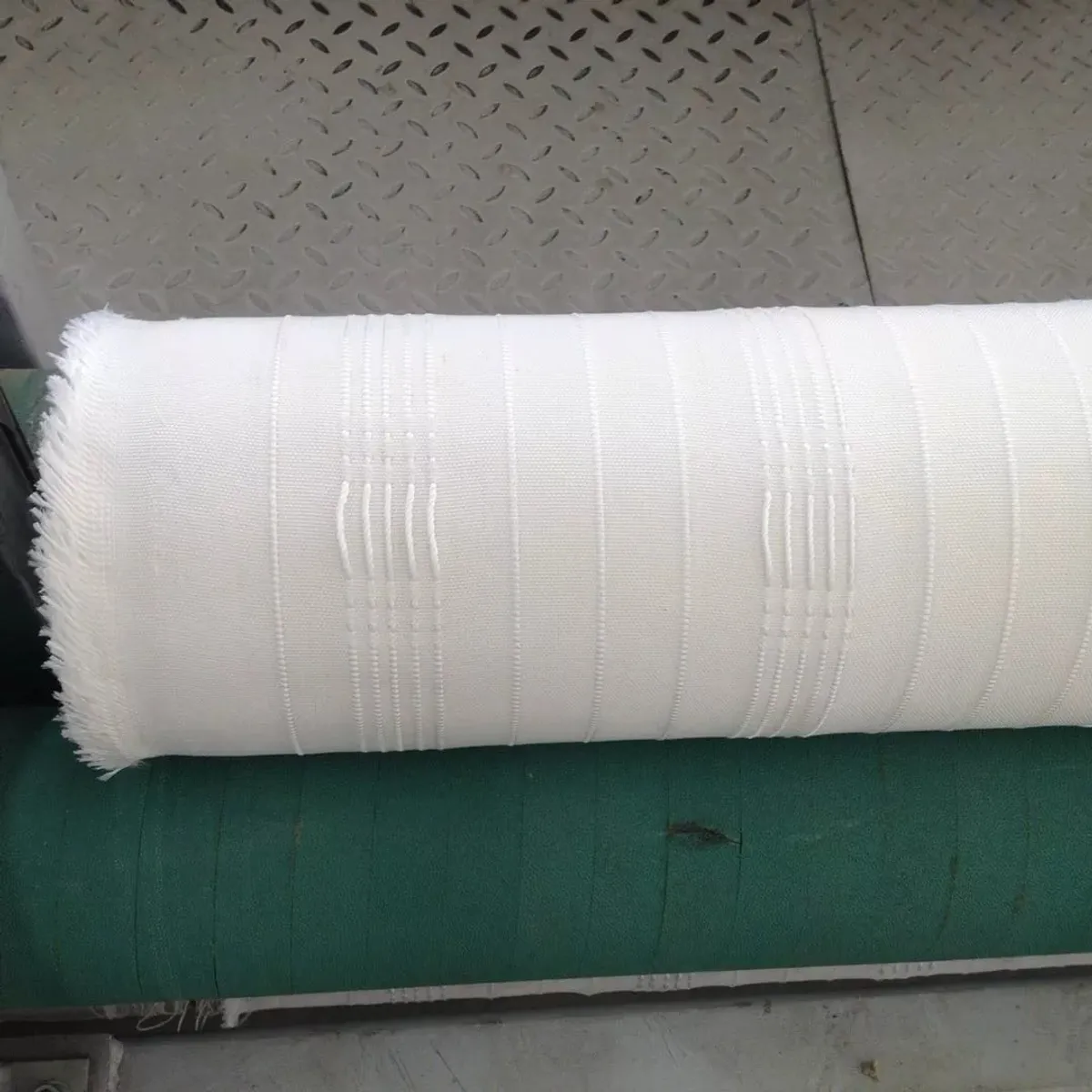
Prepare the subgrade
Laying geotextile well starts before the roll comes off the truck. Clear sharp stones, roots and debris, then grade and compact the surface. Anything that can punch through the fabric gets removed or buried under a sand levelling layer. For geotextile in road construction this matters most under the first lift of fill — that's where a stone you missed becomes a hole. The cleaner the base, the longer the fabric does its job.
Roll out and overlap
Unroll the fabric in the direction the construction drawing shows, flat and wrinkle-free. Adjacent rolls have to overlap — typically 0.3–0.5 m on firm ground, 0.5–1.0 m on soft or wet subgrades where the fabric can shift under load. The drawing always calls out the overlap width, roll direction and seam type, and the overlap is the detail inspectors check first because too little of it is the most common defect.
Seams and anchoring
Join panels by overlap, sewing or thermal bonding per the design. Anchor the leading edge in a trench or with pins so the fabric doesn't crawl during backfilling. On slopes, anchor at the crest first and work downhill. Keep plant and traffic off the bare fabric — every pass on exposed geotextile is a chance to tear or contaminate it.
Backfill and protect
Place and spread fill from over already-covered fabric — never drive directly on exposed geotextile. Use the spec'd lift thickness on the first layer so the fabric doesn't bunch and fold. Once covered, the function of the geotextile in road construction is plain: it separates the fill from the subgrade so the two don't mix, filters pore water, and reinforces the soil layers as designed — three jobs from one membrane. Capturing these four steps — subgrade prep, overlap, anchoring, protected backfill — as a short method statement for laying the geotextile keeps every crew and inspector working to the same installation procedure. We cut rolls to project width to trim overlaps and waste — tell us the width and we'll size them.
Free Geosynthetics Spec & Selection Guide
Material grades, thickness/GSM sizing and price ranges for your project — sent to your inbox.
Frequently asked questions
How much overlap do geotextiles need?
Typically 0.3–0.5 m on firm ground, rising to 0.5–1.0 m on soft or wet subgrades. The exact overlap is on the project construction drawing.
Can vehicles drive directly on geotextile?
No. Always place a fill layer first and drive on the fill, not the bare fabric, or you tear and displace it.
Related product
View Nonwoven GeotextileNeed a quote or a spec check?
Tell us your application and quantity — our English-speaking team replies within one business day.