
Geotextile standards for road embankments: ASTM, GRI and IS codes
The international standards behind a road-embankment geotextile spec — ASTM D4595 wide-width tensile, ASTM D4833 puncture, GRI test methods and the IS codes used in India — what each one fixes and how acceptance works.
Why a geotextile spec leans on standards
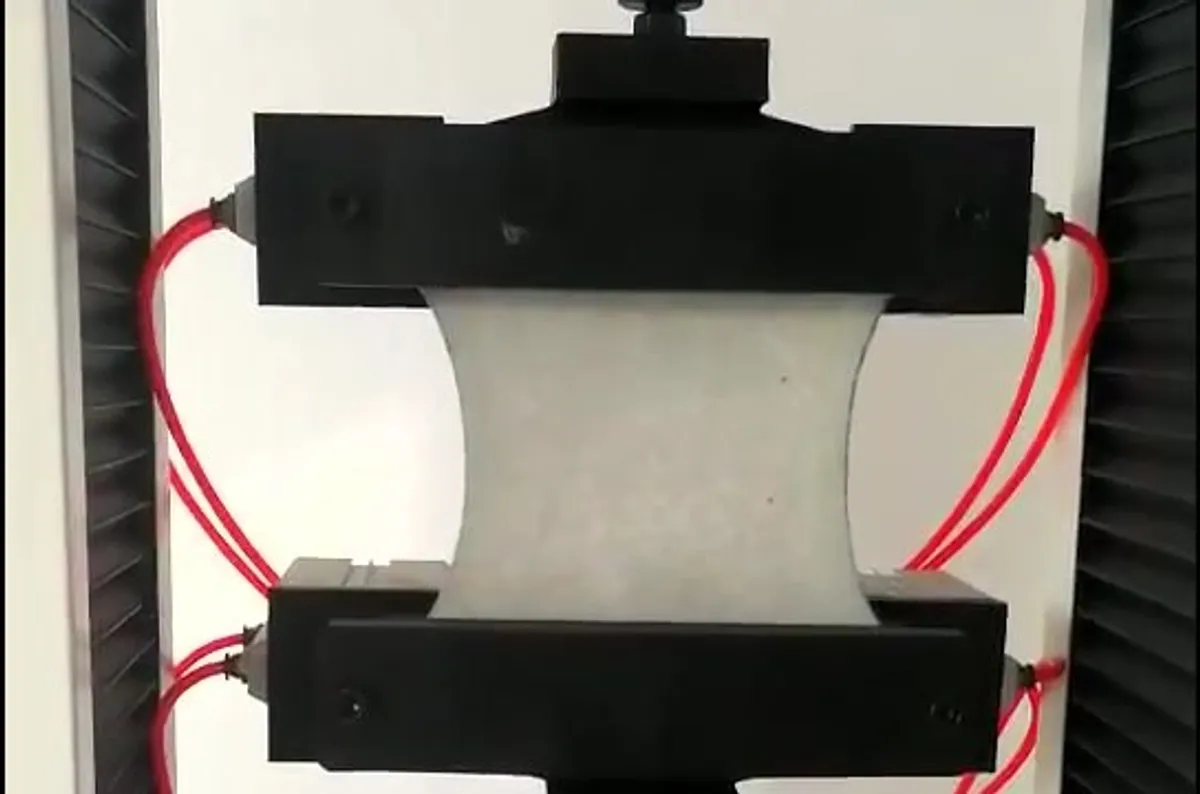
A geotextile spec for a road embankment on soft ground is only enforceable when every property is pinned to a named test method. 'Tensile strength 20 kN/m' is meaningless on its own — measured grab or wide-width, at what elongation? The standards exist so the supplier, the contractor and the inspector all measure the same thing the same way. For geotextile in road construction the core methods are ASTM D4595 (wide-width tensile), ASTM D4833 (puncture), ASTM D4491 (permittivity) and ASTM D4751 (apparent opening size); India's IS codes (the IS 16391 series and MoRTH specifications) and ISO equivalents cover the same ground for local acceptance.
Material requirements
The spec frames the geotextile by functional properties — wide-width tensile and elongation, CBR puncture resistance, permittivity, apparent opening size — chosen for the separation, filtration and reinforcement role on soft subgrade. The project fixes the required class (a kN/m tensile value, or a TS/ART grade), and the delivered fabric must meet or beat it on mill test certificates issued to those ASTM/IS methods.
Installation requirements
Standards and method specs govern how the fabric is laid: subgrade preparation, roll orientation, overlap or seam width between adjacent rolls, and protecting the fabric while the first lift of fill goes on. Two defects cause most failures on site — too little overlap, and tearing under the first lift driven directly on the bare fabric. Both are spelled out precisely because both are common.
Acceptance and testing
Acceptance checks that the delivered material matches the certified class and that installation followed the spec — overlaps, continuity, no damage. Sampling rules (how many rolls a lot covers, how specimens are cut) let a test on a few specimens stand for the whole consignment. Keep the test certificates and inspection records in the project file; on important jobs an independent lab re-runs the wide-width tensile to ASTM D4595 to confirm the mill numbers.
Supplying to your standard
We supply non-woven and woven geotextile with test reports to the class and standard your project names — ASTM, GRI, ISO or the relevant IS code. Send the spec and we will quote a compliant grade with the documentation.
Free Geosynthetics Spec & Selection Guide
Material grades, thickness/GSM sizing and price ranges for your project — sent to your inbox.
Frequently asked questions
Which ASTM standard governs geotextile tensile strength?
ASTM D4595 (wide-width strip tensile) for the design value; ASTM D4632 (grab) is sometimes quoted for QC. A kN/m figure is only unambiguous when the test method is named alongside it.
Is there an IS code for geotextile in India?
Yes — the IS 16391 series and MoRTH specifications cover geotextile properties and acceptance for road works. They map onto the same functional properties the ASTM methods define.
Related product
View Nonwoven GeotextileNeed a quote or a spec check?
Tell us your application and quantity — our English-speaking team replies within one business day.