
 Geogrid
 Uniaxial Geogrid
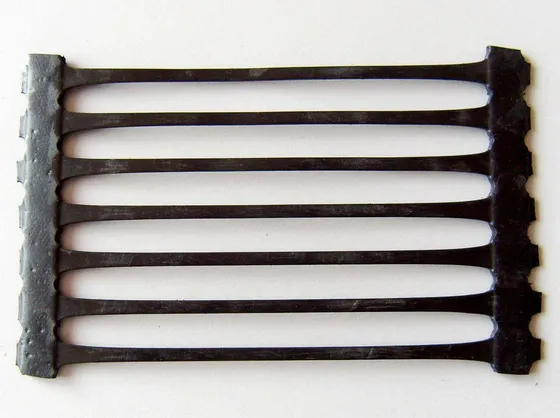
PP and HDPE uniaxial geogrid for retaining walls, MSE walls and reinforced slopes — 60–300 kN/m machine-direction strength, long oval apertures, low creep.
- 60–300 kN/m
- PP · HDPE uniaxial
- ASTM D6637
A geogrid reinforced slope stands steeper than the soil alone allows — but the grid does not stop rain washing the face. How reinforcement and surface erosion control split the work, and which product does which.
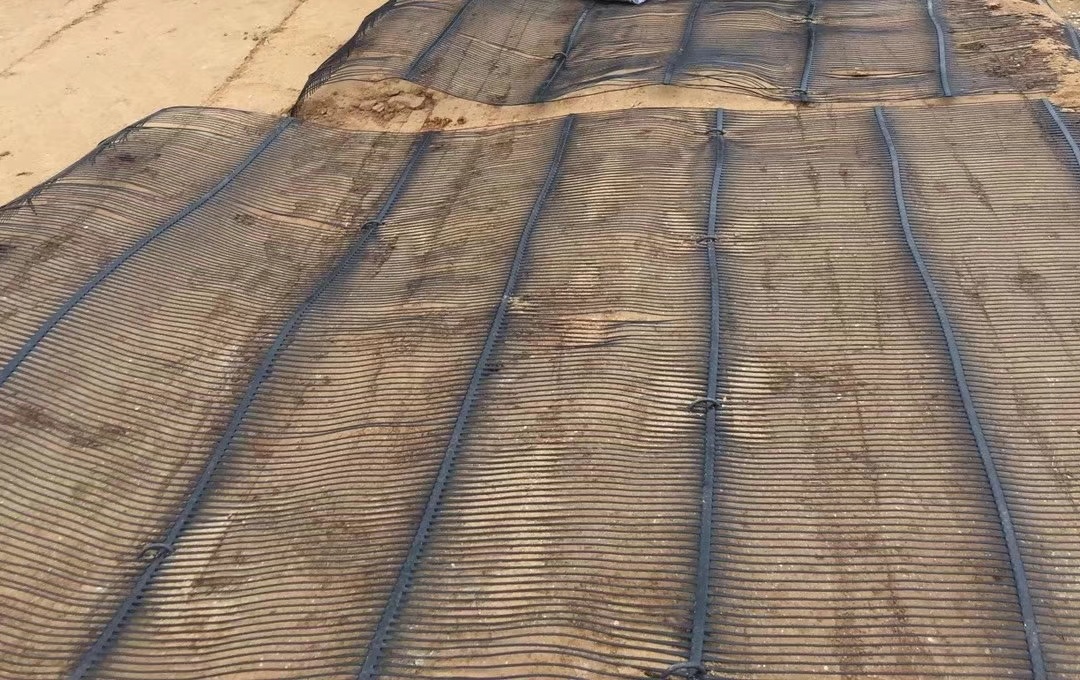
A slope can fail in two unrelated ways, and confusing them is the most common specification mistake on this kind of job. It can fail internally, when a mass of soil slides along a deep surface because the fill has no tensile capacity to hold it together — that is what geogrid slope stabilization addresses. Or it can fail at the surface, when rain, runoff and wind strip the topsoil off the face before vegetation ever roots. A buried reinforcement layer does nothing about the second problem; a surface mat does nothing about the first. Most slopes that hold up over ten years have both, and the two are chosen independently.
Build a fill steeper than its soil will stand and the mass wants to slide. Lay horizontal layers of grid into the compacted lifts and the fill becomes a composite: any potential slip surface has to cut through the reinforcement, and the grid resists in tension while the soil resists in friction. That is why a geogrid reinforced slope can be built at angles the unreinforced material could never hold, which on a constrained site is the whole point — you buy back the footprint that a flatter batter would have eaten. The forces pull in one direction, back into the fill and away from the face, so the reinforcement used is uniaxial geogrid: drawn in the machine direction only, high tensile capacity along the roll, low creep. Layer strength, vertical spacing and embedment length come from the slope stability analysis, not from a catalogue.
On steep reinforced slopes the top of each layer is turned back over the compacted lift and buried in the fill above, so the grid wraps the face rather than stopping short of it. That confines the soil at the edge, which is exactly where a reinforced fill is weakest and where compaction plant cannot reach properly. The wrapped face also gives topsoil and seeding something to sit in instead of sliding off. On flatter geogrid on slope work — embankment shoulders, dyke faces, widened cuttings — the layers simply run through with a normal overlap and the face is dressed and protected separately.
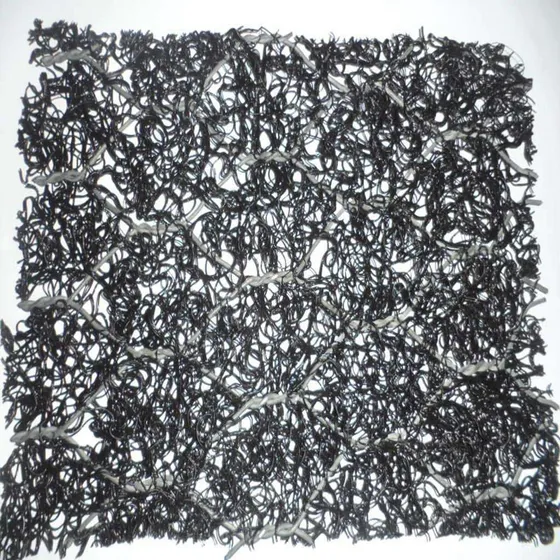
Once the slope is stable as a mass, the remaining enemy is water moving across the face. This is where geogrid erosion control as a search term is really asking about a different family of products. A 3D reinforced geomat is a thick, open three-dimensional mesh laid on the finished face and filled with topsoil: it holds the soil against rain splash and sheet flow while grass roots grow down through it, and once established the roots and the mat lock together permanently. That is the honest answer for a vegetated geogrid face — the reinforcement is buried in the fill, the geomat is on top of it, and each does the job the other cannot.
Where the face is steeper, the flow concentrates, or the surface has to carry loose fill rather than just topsoil, a geomat is not enough and the answer is cellular confinement. A smooth HDPE geocell expanded over the slope and pinned creates closed pockets that hold soil, gravel or concrete infill in place against gravity and runoff — each cell is its own small retaining structure. On steeper faces and under higher head, a textured HDPE geocell is specified instead: the roughened cell wall raises the friction between the infill and the cell so the fill does not creep down inside its own pocket. As a rough division: geomat for vegetated slopes at moderate angles, geocell where the infill would otherwise migrate.
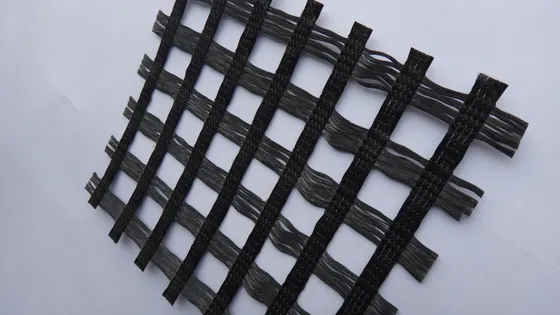
For most geogrid for slopes work in ordinary granular fill, the punched-and-drawn uniaxial geogrid range is the default — PP from 60 to 300 kN/m, or the HDPE range where the submittal has to show published creep and durability data rather than assumed values. Where the face is irregular, the fill is placed in tight radii, or the design is written against a long-term design strength, a warp-knitted polyester geogrid is the better fit: it is flexible, so it drapes onto a cut face and wraps a lift without the memory of an extruded roll, and its long-term design strength is published against a stated design life. Choose the polymer for how the grid has to behave on site and what the design has to prove, then pick the grade from the analysis.
A slope package is normally three things: reinforcement in the fill, separation and drainage behind it, and protection on the face. Behind the reinforced zone, a woven geotextile separates the fill from soft natural ground where the separator also has to carry load, and a nonwoven geotextile handles filtration and drainage where water has to get out without carrying fines with it. Send us the slope height and angle, the fill type, the design layer strengths and spacing, and how the face is to be finished, and we will quote the grid and the face protection together from the product range so nothing arrives on site in two unmatched consignments.
Free Geosynthetics Spec & Selection Guide
Material grades, thickness/GSM sizing and price ranges for your project — sent to your inbox.
Not by itself. A buried geogrid reinforces the soil mass against sliding; it is under the surface and does nothing about rain and runoff stripping the face. Surface erosion is controlled by a 3D reinforced geomat that holds topsoil while vegetation establishes, or by a geocell where infill would otherwise migrate. Most steep slopes need both — reinforcement inside, protection on top.
Uniaxial. In a reinforced slope the tension pulls in one clear direction — back into the fill, away from the face — so a grid drawn in the machine direction only puts its full capacity where the load is. Biaxial grid belongs under roads, yards and working platforms where wheel loads arrive from every direction.
Steeper than the fill would stand unreinforced, with the achievable angle set by the soil strength, layer spacing, reinforcement strength and groundwater — not by the grid alone. Past the point where the face needs structural support rather than reinforcement, the design becomes a reinforced-soil retaining wall. The slope stability analysis decides where that line falls on your site.
It describes a reinforced slope finished so grass can establish on the face: the reinforcement layers are wrapped back into the fill at the edge, topsoil is placed in a 3D geomat over the face, then it is seeded or hydroseeded. The mat holds the soil through the first rains; once roots grow through it, the mat and the root network act as one erosion-resistant layer.
Use a geomat where the finish is topsoil and vegetation on a moderate face. Use a geocell where the infill would slide out of a mat — steeper faces, concentrated flow, or gravel and concrete infill instead of soil. Smooth cell wall for general confinement; textured cell wall where the steeper angle needs more friction between infill and cell.
Usually yes, for a different reason than the grid. A woven geotextile separates imported fill from soft natural ground so the two do not mix, and a nonwoven geotextile filters and drains water out of the reinforced zone without letting fines wash through. Reinforcement, separation and drainage are three functions; one product rarely does all three well.
Geogrid PP and HDPE uniaxial geogrid for retaining walls, MSE walls and reinforced slopes — 60–300 kN/m machine-direction strength, long oval apertures, low creep.
 Geogrid
 Warp-knitted PET geogrid with published long-term design strength — 34 to 452 kN/m LTDS at a 120-year design life, PVC, SBR or bitumen coated.
 Erosion Control
 3D reinforced geomat — a 3D PP mesh matrix composited with galvanized steel wire mesh that anchors topsoil and grass on slopes for erosion control.
Tell us your application and quantity — our English-speaking team replies within one business day.